- Meyka AI's Newsletter
- Posts
- Power Shifts This Week: Trump’s Legal Moves, Security Chief Resigns, War Talks Intensify
Power Shifts This Week: Trump’s Legal Moves, Security Chief Resigns, War Talks Intensify
Even small headlines moved markets. Are you seeing what others are missing?

Danny Kontos
March 18, 2026
Markets do not always move on earnings or economic data. This week, they responded to shifts in power, policy, and global tension. Oil prices climbed, political developments deepened uncertainty, and investors were left to assess whether these changes signal a temporary disruption or a more lasting shift in the global order.
Market Mood Snapshot:
Power, Policy & Panic: Markets React to Political Shockwaves
Global markets moved with caution this week. The dominant driver was not earnings or economic data, but geopolitics. Investors reacted to escalating conflict in the Middle East, rising oil prices, and renewed political uncertainty in the United States.
Energy and defense stocks led gains, while broader equity markets showed mixed performance. Oil crossed the $100 mark again and, in some physical markets, surged even higher due to supply disruptions linked to the Strait of Hormuz crisis.
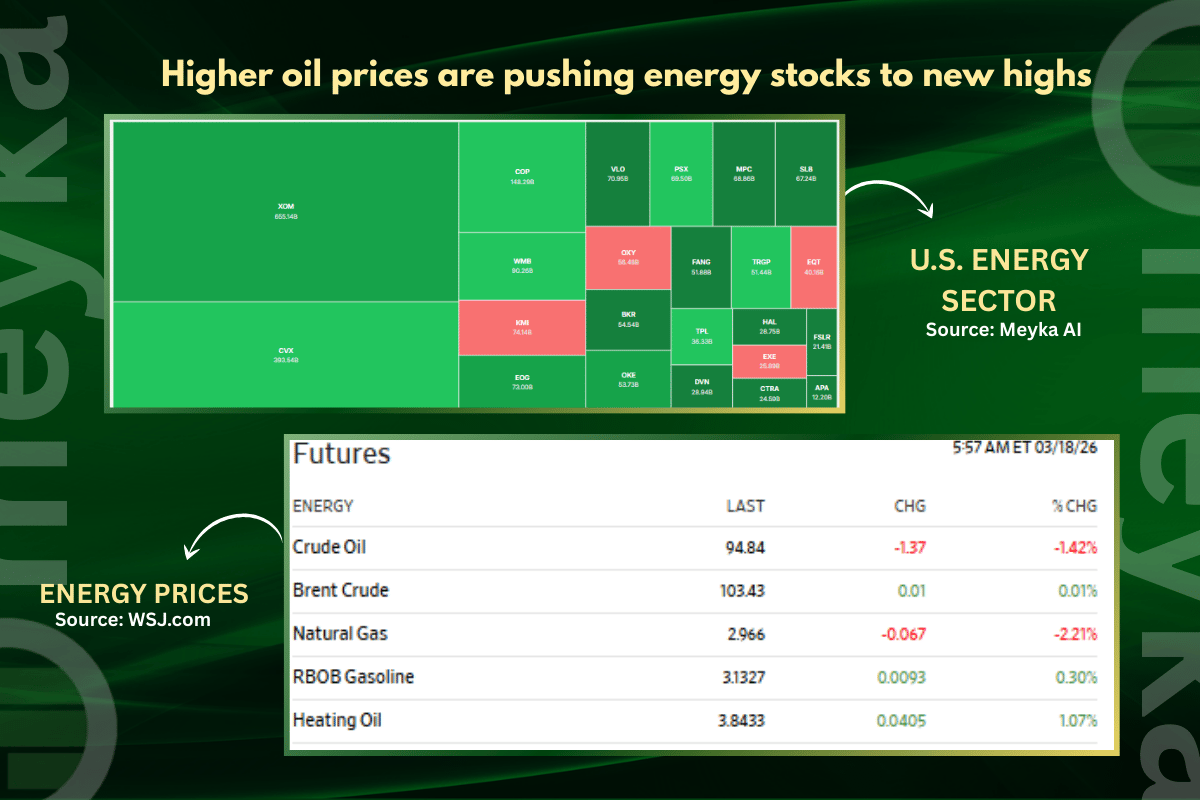
At the same time, equities did not collapse. This suggests that investors are not yet pricing in a prolonged global shock. The current mood can be described as alert but not panicked.
2-Minute Weekly Brief:
The 3 Power Moves That Shook Markets This Week
Oil prices remained above $100 for multiple sessions as conflict disrupted flows through the Strait of Hormuz, which handles nearly 20% of global supply.
In extreme cases, alternative crude sources surged above $150 due to supply shortages and rerouting of shipments.
The United States carried out major strikes on Iranian military infrastructure on March 13, targeting over 90 sites linked to maritime disruption.
President Donald Trump delayed a planned China visit. This also signaled a shift in global trade and diplomatic priorities amid the conflict.
NATO and key allies declined to support U.S. operations in securing oil routes which raised questions about global coordination.
Policymakers in the U.S. are now considering windfall taxes on oil companies as profits surge alongside energy prices.
➤ Master Market Analysis with Meyka Education Guides
Noise vs Signal:
What Actually Matters vs What Just Sounds Big
What is getting attention?
Political headlines are dominating the narrative. Military strikes, diplomatic tensions, and leadership decisions are driving daily market swings. These developments create sharp reactions, especially in oil and defense-related assets.
What actually matters?
The real signal lies in supply chains and policy direction. The partial shutdown of the Strait of Hormuz is not just a headline event. It directly affects global energy pricing, shipping costs, and inflation expectations.
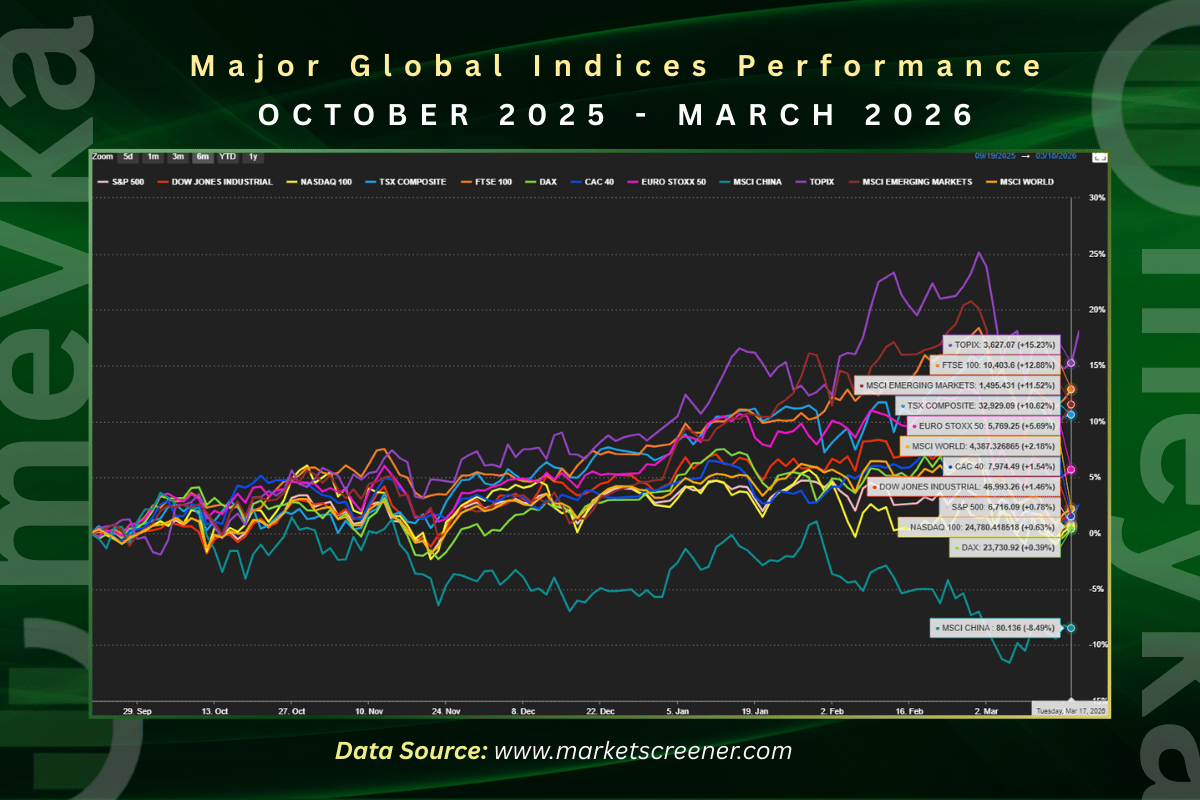
Markets are also watching whether this conflict expands or stabilizes. Short-term volatility is driven by headlines, but long-term impact depends on whether energy flows normalize and whether major economies adjust policy in response.
Investors should focus less on daily developments and more on sustained disruptions in energy and trade.
What Most Missed:
One underreported shift is the growing policy response. U.S. lawmakers are actively discussing windfall taxes on oil companies as profits surge. This reflects rising political pressure to manage inflation and redistribute gains during crisis periods.
Another overlooked signal is the breakdown in global coordination. NATO’s refusal to participate in securing key shipping routes suggests a more fragmented geopolitical environment. For markets, this matters. A less coordinated global response increases uncertainty and raises the risk premium across assets.
One Chart, One Story:
Oil Spikes vs Market Stability, A Fragile Balance
If one were to observe oil prices against global equity indices this week, a clear divergence would emerge.
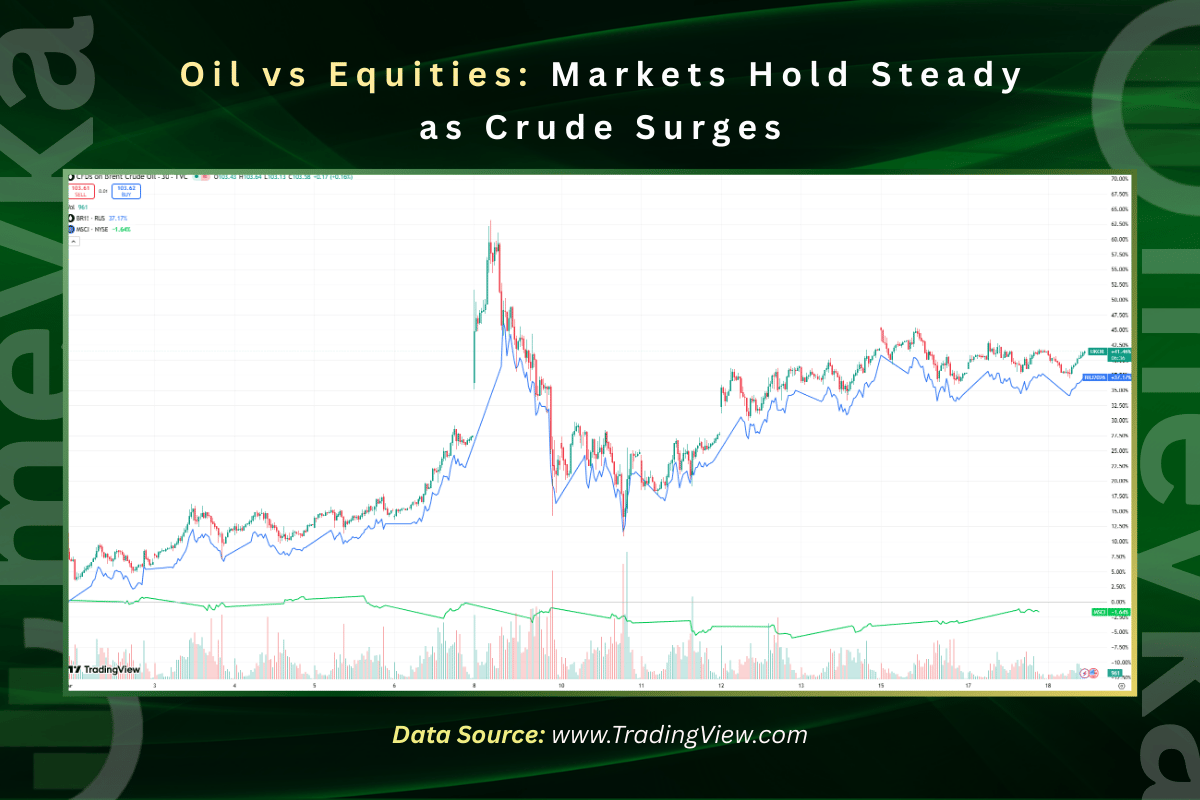
Oil surged sharply due to supply fears, while equity markets remained relatively stable. In previous crises, such a spike in oil would have triggered broader market declines. That has not happened yet.
This divergence suggests that equity investors expect the situation to stabilize or remain contained. However, if oil prices stay elevated for longer, the impact will likely feed into inflation, corporate costs, and consumer demand.
The current balance is fragile. Markets are stable, but the underlying pressure is building.
Market Quirks & Quips: In October 2008, during peak crisis panic, trading volume on the NYSE hit a then-record 11.2 billion shares in a single day. Years later, similar spikes now often come from algorithmic trades, not human fear. Also, studies show investors check portfolios more during market drops than rallies. Losses get more attention than gains.
Opportunity Lens:
Where Smart Investors are Looking Right Now
Periods of geopolitical stress often reshape capital flows rather than destroy them. The energy and defense sectors are already seeing renewed interest. This is not only due to short-term demand but also expectations of sustained government spending and supply constraints.
At the same time, elevated oil prices can accelerate investment in alternative energy and efficiency-focused industries. Historically, such transitions begin during periods of disruption, not stability.
For investors, the key is not to chase short-term price spikes, but to understand where structural demand is shifting. Energy security, supply chain resilience, and strategic industries are becoming central themes again.
➤ Analyze Key Market Movers with Meyka’s Screener
Investor Mind Gym
When Headlines Trigger Fear, Stay Rational
This week highlights a common behavioral bias: recency bias.
Investors tend to overweight the latest dramatic events. A sudden spike in oil or a major geopolitical headline can create the impression that current conditions will persist indefinitely.
In reality, markets often adjust quickly once uncertainty reduces. The sharp swings in oil over the past two weeks, rising above $100 and then falling nearly 7% on de-escalation signals, illustrate this pattern clearly. The discipline lies in separating immediate reaction from long-term impact.
Trending Now on Meyka
Top stories our readers can’t stop exploring today
India’s key index rallied as signals of easing conflict reduced near‑term oil cost concerns and boosted risk sentiment.
Rising oil prices from the Iran conflict may increase Samsung’s production costs and affect tech supply chains.
Gold and silver prices remain steady as markets await the Fed’s next policy move amid geopolitical tension.
The RBA lifted rates to 4.1% due to rising fuel costs and ongoing inflation pressures.
Meyka Ask: Are You Investing or Just Reacting to Headlines?
This week is a reminder that markets do not move on data alone. They respond to power, policy, and perception.
The key question is simple. Are you reacting to headlines, or are you interpreting trends?
Periods like this reward patience and clarity. Focus on what changes long-term cash flows and economic direction. Ignore what only shifts sentiment for a day or two.
Money Minute 💡: Did You Know?
During the 1973 oil crisis, the price of crude oil quadrupled in just six months. This sudden jump pushed global inflation higher and forced many companies to rethink energy use. It shows how geopolitical events can ripple through economies and markets almost instantly.
➤ Have Questions About the Market?