- Meyka AI's Newsletter
- Posts
- Trump, War & Capital Flows: How the S&P 500, NYSE and Bitcoin are Shifting
Trump, War & Capital Flows: How the S&P 500, NYSE and Bitcoin are Shifting
Capital is not waiting for clarity. It is already moving.

Danny Kontos
April 01, 2026

Markets do not move in isolation, and this week they are moving in response to one name above all others: Donald Trump. Between escalating trade disputes, unresolved military conflicts, and shifting monetary policy expectations, investors are quietly repositioning across equities and digital assets. The S&P 500, the NYSE, and Bitcoin are each reflecting a different dimension of the same underlying pressure, and the numbers are worth examining carefully.
Neighborhood runs & meetups
Market Mood Snapshot: Capital Shifts Under Political Pressure
The market moved with caution this week. Investors showed a mixed response to rising geopolitical tension and ongoing political uncertainty and policy signals from the U.S. administration. Equity markets held relatively firm, but participation remained narrow. Large-cap stocks continued to carry the S&P 500, while broader NYSE indicators suggested weaker underlying strength.
At the same time, Bitcoin showed renewed upward momentum. This reflects a shift in how capital is positioning. Investors are not fully risk-off, but they are hedging. The mood is not panicking. It is controlled by uncertainty, with capital moving more selectively rather than exiting entirely.
2-Minute Weekly Brief: Trump Signals, War Risks & Market Reactions
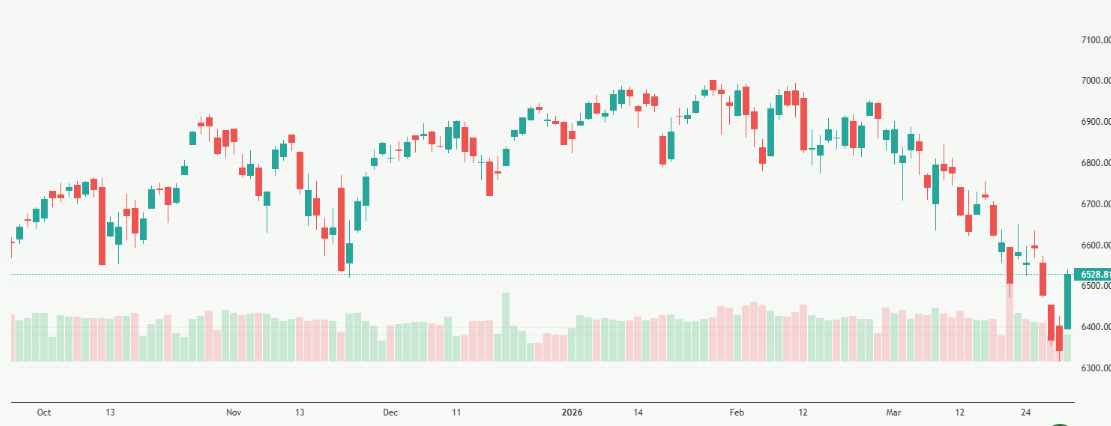
Meyka AI: S&P 500 Index (^SPX) Index Overview
The S&P 500 remained near record levels, with gains concentrated in a handful of large-cap technology stocks as of late March 2026.
NYSE breadth indicators weakened. The advance-decline line declined, showing fewer stocks are supporting the rally.
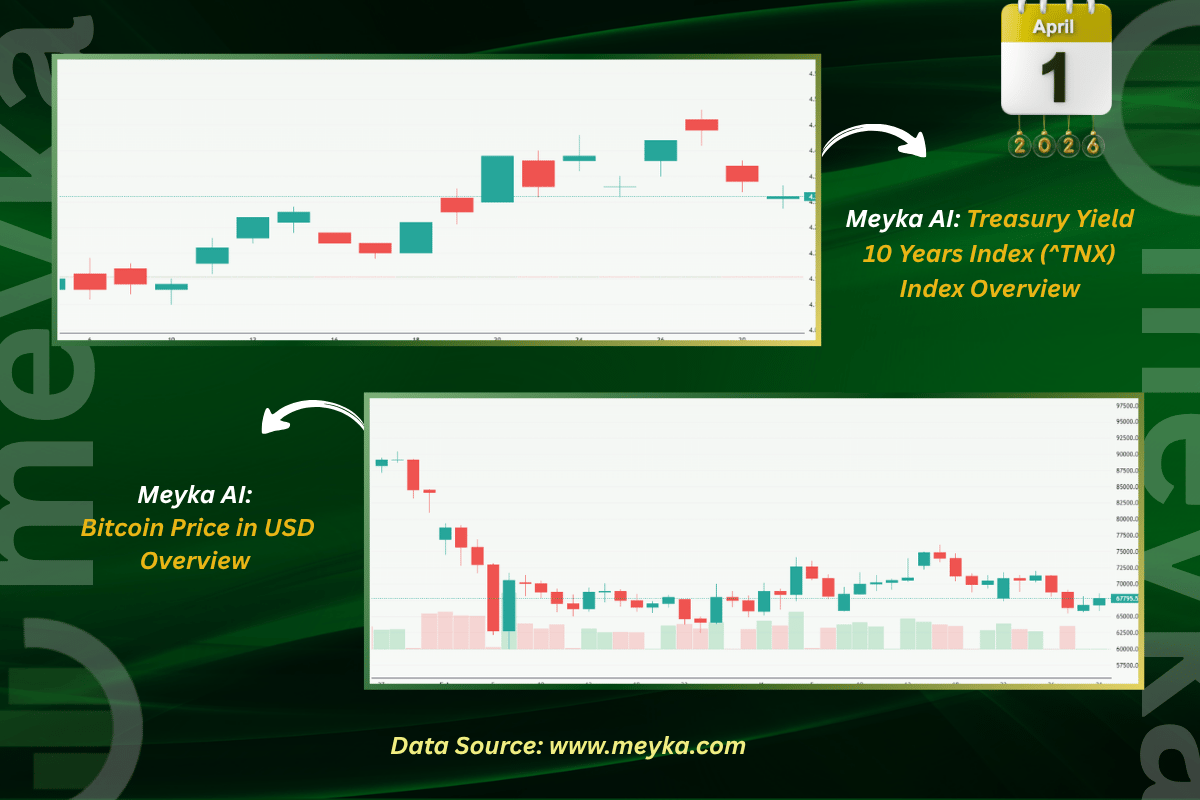
Bitcoin traded above $70,000 during the week, supported by continued ETF inflows and institutional demand.
U.S. Treasury yields stayed elevated, with the 10-year yield holding near 4.2 percent. This reflects persistent inflation concerns.
Political developments and statements from Donald Trump added uncertainty around trade and foreign policy direction.
Ongoing geopolitical tensions in Eastern Europe and the Middle East kept energy prices volatile, particularly oil.
➤ Explore Today’s Meyka Picks
Noise vs Signal: What Matters vs What’s Just Headlines
Noise
Political headlines dominated the news cycle. Statements around tariffs, foreign policy shifts, created short-term reactions. However, most of these remain proposals without immediate policy impact.
War-related headlines also intensified. Many reports focused on potential escalation scenarios rather than confirmed developments. These stories tend to influence sentiment quickly but often fade without lasting market impact.
Signal
Institutional capital flows tell a clearer story. Continued inflows into Bitcoin ETFs and steady demand for large-cap equities indicate that investors are reallocating rather than withdrawing.
Bond yields remain elevated. This reflects real economic pressure points, particularly inflation expectations and interest rate uncertainty. These factors directly influence valuation models and capital allocation decisions. For investors, the signal lies in where money is moving, not in what headlines suggest might happen.
What Most Missed: The Quiet Shift in Market Breadth
One important development was the continued concentration in equity market gains. Recent data shows that a small group of stocks contributed a significant portion of the S&P 500’s performance in Q1 2026. This pattern mirrors earlier periods such as 2023, where narrow leadership masked broader weakness.
Another underreported factor is institutional positioning in crypto markets. Spot Bitcoin ETFs in the United States have continued to attract steady inflows, even during weeks of macro uncertainty. This suggests that large investors are increasingly treating Bitcoin as a strategic allocation rather than a speculative trade.
These shifts do not dominate headlines, but they shape market direction over time.
Trending Now on Meyka
Top stories our readers can’t stop exploring today
Bitcoin climbs to $73,752, driven by renewed ETF inflows and geopolitical demand. Signals a shift toward Bitcoin as a macro hedge.
🔥 Australia Stocks Jump as ASX 200 Surges 2.24%
The ASX 200 rose 2.24% as mining and banking stocks led a broad market rebound.
🔥 FTSE 100 Rises on Trump’s Iran Exit Signal
UK stocks gained as geopolitical tensions and a stronger pound supported sentiment.
🔥 Gold Climbs Past ₹1.51 Lakh While Silver Weakens
Gold gained on safe-haven demand, while silver slipped amid weaker industrial outlook.
➤ Explore This Week’s Market News
One Chart, One Story: Capital Rotation - Stocks vs Bitcoin
If we observe a simple comparison between the S&P 500 and Bitcoin over the past 30 days, a clear divergence appears. The S&P 500 has moved sideways with limited breadth support, while Bitcoin has shown a more consistent upward trend.
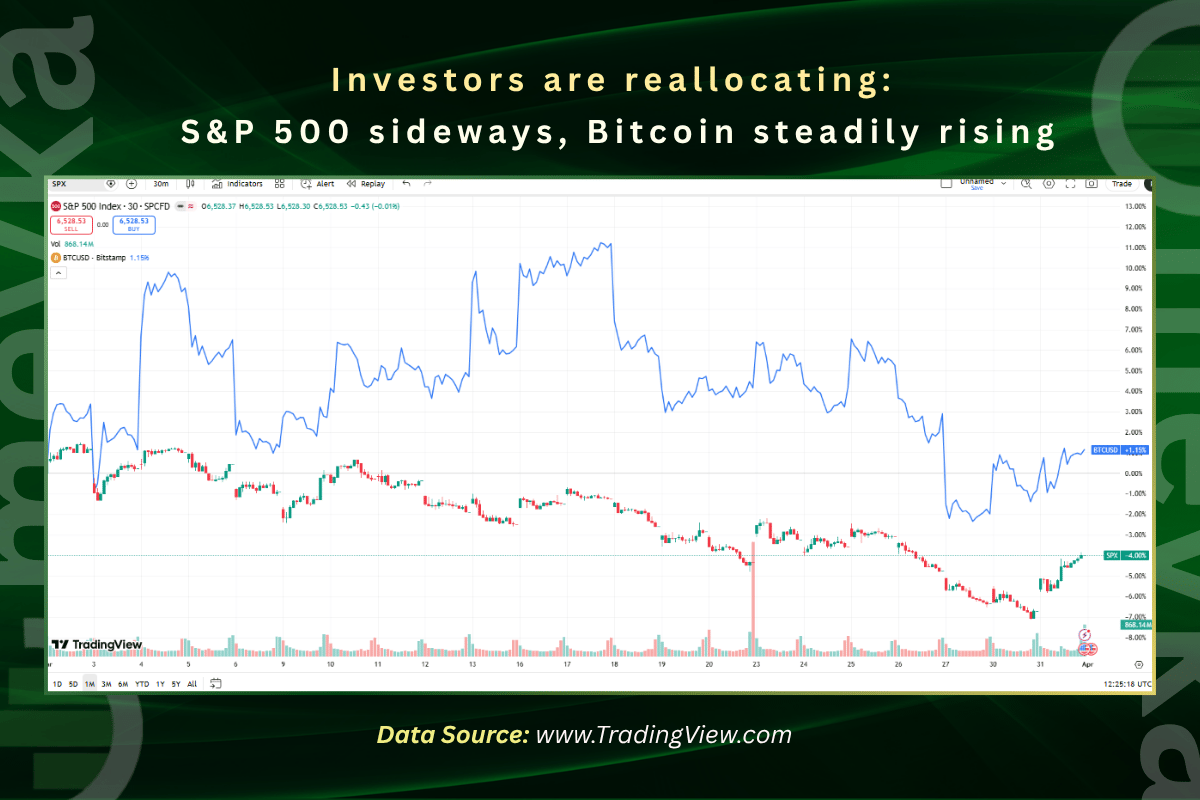
This pattern highlights a shift in capital behavior. When uncertainty rises, investors often look for assets that are less tied to traditional economic cycles. Bitcoin’s recent strength suggests that some capital is seeking flexibility and independence from equity market structures.
For investors, the key takeaway is not that one asset is replacing another. It is that capital is spreading across different systems to manage risk more effectively.
Money Minute 💡: Market Breadth
Market breadth shows how many stocks are rising versus falling in an index. A strong market usually has broad participation. When only a few large stocks drive gains, the trend may be weaker than it appears.
Takeaway: Always check how many stocks are supporting the move, not just the index level.
Opportunity Lens: Early Signs of Strategic Positioning
Periods of uncertainty often reveal where resilience exists. Defensive sectors such as energy and utilities have shown relative strength, supported by stable demand and pricing power. At the same time, large-cap technology continues to attract capital due to strong balance sheets and earnings visibility.
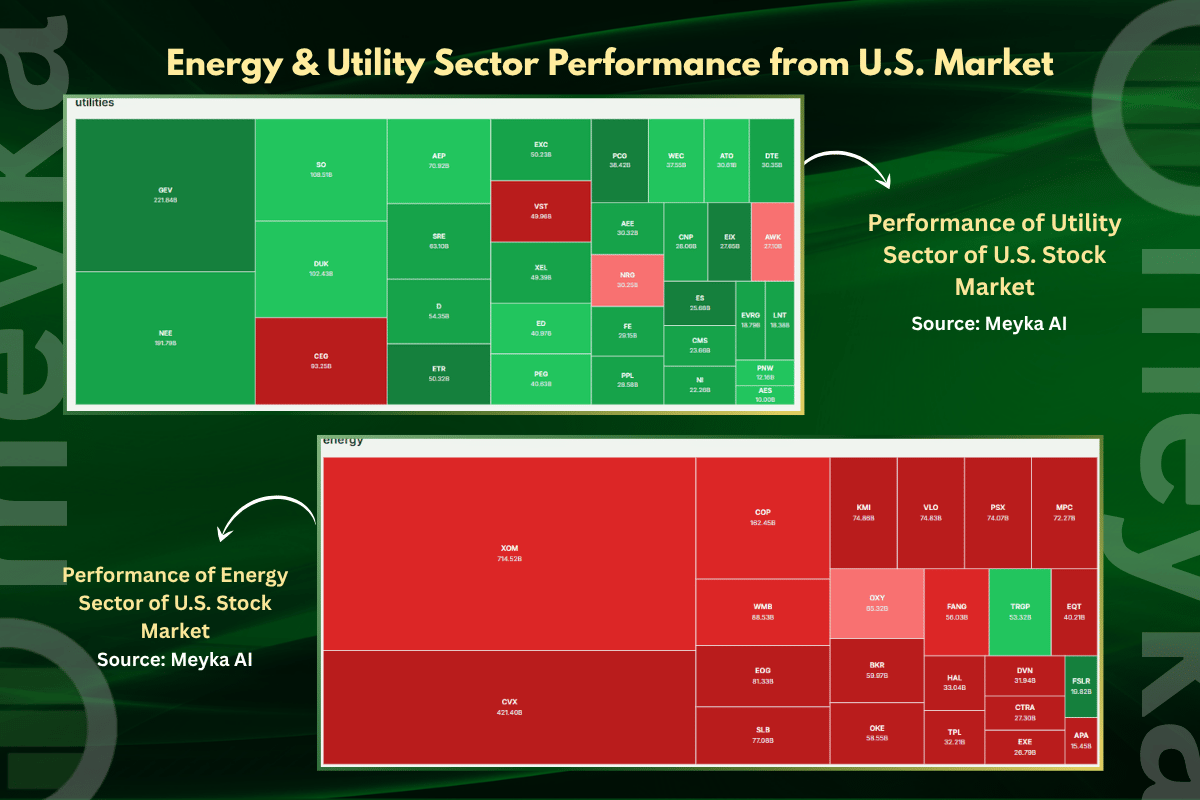
Bitcoin’s continued inflows suggest a growing role as a portfolio diversifier. This does not imply a shift away from equities, but rather a broader approach to allocation.
Investors should focus on understanding why capital is moving, rather than reacting to short-term price changes. Structural trends tend to develop quietly before they become widely recognized.
Investor Mind Gym: Discipline Over Distraction
Recency bias remains a key challenge in the current market. When investors see strong performance in a narrow group of stocks, they often assume that trend will continue indefinitely.
This week’s market structure offers a reminder that leadership can be fragile. Broad participation matters more than short-term gains. Investors who focus only on recent winners may overlook underlying risks.
A disciplined approach requires stepping back and assessing whether current trends are sustainable.
Market Quirks & Quips: In March 2020, during the COVID market crash, trading volume on Robinhood surged so fast that the app crashed on its busiest day. Many users could not trade at all.
Even more surprising, studies from Dalbar continue to show that the average investor underperforms the market largely due to poor timing decisions.
Ask Meyka / Reflection
Markets rarely move in a straight line, especially when politics and global risk intersect. This week is a reminder that capital does not disappear during uncertainty. It relocates.
The more useful question is not whether volatility will increase, but whether your positioning accounts for it. A balanced approach, grounded in data and patience, tends to outperform reactive decision-making over time.
➤ Explore advanced research tools: Meyka Pro
Disclaimer:
The content shared by Meyka AI PTY LTD is solely for research and informational purposes. Meyka is not a financial advisory service, and the information provided should not be considered investment or trading advice.